Once doubted and once grieving, João Neves turned pain into purpose — the true meaning behind his tears in PSG’s Champions League final triumph.
João Neves did not arrive in Paris as a finished star. He arrived with a reputation built on intelligence rather than power, and with a personal history that would quietly shape everything that followed.
Born in Tavira, Portugal, Neves grew up in a family where football and discipline were inseparable. His mother was a physical education teacher, his father a former amateur footballer. They were not wealthy and had no connections, but effort and accountability were non-negotiable. From an early age, his mother pushed him harder than others, knowing that his size would always be used against him.
As a youth player at Casa Benfica and later Benfica’s academy, Neves quickly understood that physical dominance would never be his advantage. Instead, he developed exceptional game intelligence, positioning, and composure. Those traits became his signature and the foundation of his rise.
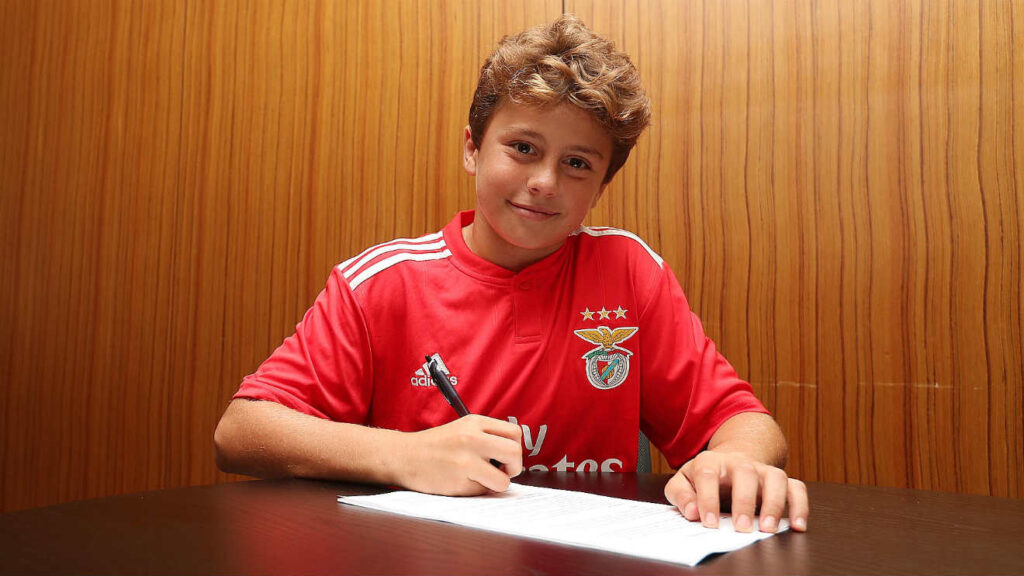
In the 2021–2022 season, Neves won the UEFA Youth League with Benfica. After the final, he called his mother, as he always did. According to people close to the family, she cried on the phone. Neves did too. She told him she knew he would go all the way. He answered with the same promise he had been repeating since childhood: one day, he would win the Champions League.
Everything changed in February 2024.
Neves lost his mother to cancer. She was not yet 50 years old. The loss was devastating. Those close to him say he struggled to speak about it publicly, and at times struggled to contain his emotions even in private. For the first time, football no longer protected him from the silence that followed her absence.

In August 2024, Paris Saint-Germain signed João Neves for a reported fee of €60 million. The reaction was immediate and harsh. Many questioned the price, calling it excessive and unjustified. Neves did not respond. He kept his head down and went to work.
From his first matches in Paris, he looked unusually composed for a player his age. Calm on the ball, precise in his decisions, and constantly available, he quickly became indispensable. PSG supporters began calling him “Joyau Neves,” a recognition of both his technical quality and his maturity.

On May 31, 2025, in Munich, João Neves reached the moment he had been working toward since he was a child.
In the Champions League final, he covered every inch of the pitch. He tackled, pressed, and fought until there was nothing left. When the referee blew the final whistle, Neves dropped to the ground. Cameras caught him with his face buried in his hands, crying uncontrollably.
Teammates tried to lift him. He needed a few seconds.
He had done it.
He had kept his promise.
Later, as he finally stood up and looked into the stands, Neves said he felt as if his mother had been there with him. Not as a memory, but as a presence he had carried through every step of his journey.
Winning the Champions League was the greatest achievement of his career. For João Neves, it was also something far more personal: proof that a promise made in childhood, through years of doubt, loss, and pressure, had finally been fulfilled.